
Driving After a Stroke | Physiotherapy for Seniors Vancouver
Driving is a freedom that we can take for granted. Losing this ability takes with it our sense of independence. Having a stroke is a serious set-back in a person’s life. It can be life-changing and often requires a long period of rehabilitation to come back from it. The good news is that recovery is possible.
Canadian Stroke Best Practices and the Canadian Medical Association advise that “after a stroke you do not drive for at least one month”. (https://www.lakeridgehealth.on.ca/) However, this could be longer depending on your condition. In fact, after a stroke, “most of the recovery happens in the first 3 months, and continues at a slower pace for months or years after.” (https://www.healthlinkbc.ca)
The Heart and Stroke Foundation of Canada reports that approximately ½ of people who have suffered a stroke can drive again. They stress that however “after a stroke you are not allowed to drive until you have been assessed and cleared to operate a car by your healthcare team and provincial transport department”. (http://heartandstroke.ca/stroke/recovery-and-support/everydaytasks/driving)
If you have a stroke, The Ministry of Transport is notified and your license is suspended. You will have to check with them on the status of your license and what you need to do to get it back.
The ability to drive after stroke depends on:
- Vision
- Judgment
- Attention
- Physical abilities
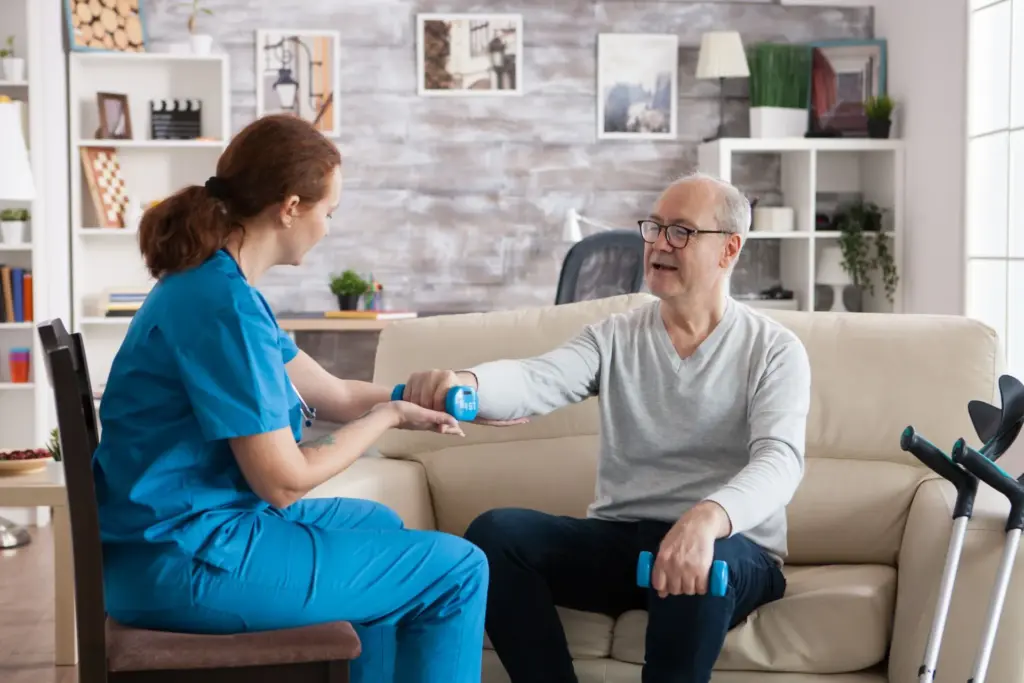
For most, regaining the mobility, focus and reflexes needed to return to the driver’s seat will require a treatment plan and a lot of hard work. An Occupational Therapist will be the key team member to support your return to driving through assessments and driving tests. A Physiotherapist will help you to regain the strength and range of motion required to drive.
After a stroke, muscles can move through a phase called flaccidity (no muscle function or tone at all) to the spasticity phase when muscles are stiff and tight. Rigorous stretching and strengthening is often required to regain normal muscle function. A Physiotherapist can help you regain normal movement after post-stroke paralysis. Balance, coordination and reflexes will be evaluated and assessed regularly until you are deemed safe to drive again.
Physio for Seniors Recommendations:
- Book and keep appointments with a skilled Physiotherapist and Occupational Therapist
- Exercise daily, continuing your personal Rehabilitation Program at home. Exercises designed for you, performed with high repetitions every day is your best chance of recovering from stroke.
- Adjust your goals based on realistic progress (do not make them too easy or too hard)
- Record your progress or regression. Your experiences will help you communicate with your healthcare team and adjustments can be made to your Rehabilitation.
Suffering a stroke is scary and can be devastating. Remember that with support and a will to recover you can get results that may lead to a return to your previous ability. Keep in mind that if you suffer permanent damage that restricts physical mobility there are assistive devices like adapted vehicles to help you get back your independence. Afterall, whatever the challenges, everyone needs and deserves to feel a sense of freedom.